Biotechnology
Definition
Biotechnology (Ancient Greek bios: life), known in German also as Biotechnik or biotech for short, is an interdisciplinary science and an umbrella term for a wide range of processes, products and methods. It deals specifically with the use of enzymes, cells and complex organisms in technical applications. Furthermore, biotechnology unites different fields. Microbiology, biochemistry, molecular biology, genetics, bioinformatics and also engineering sciences are all applied here. Among the most common goals are the development of new or more efficient processes for the manufacture of chemical compounds and diagnostic methods. The possible applications of biotechnology are not limited to one field, which is why it is also referred to as a cross-sectional technology for many industries. In addition to the development of new medicines, biotechnology can also be used to breed new plant varieties or to manufacture everyday products such as detergents and cosmetics more efficiently. 1
Manufacturing in pharmaceutical biotechnology
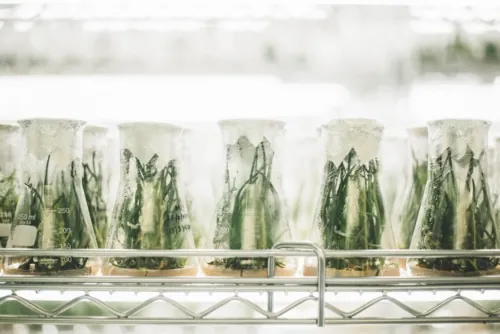
The findings of modern biotechnology form the basis of today's manufacturing processes for chemical compounds. These are used, for example, as active substances for pharmaceutics and for the manufacture of novel medicines. In addition, the findings obtained in this sector can also be used for the manufacture of basic chemicals for the chemical industry, diagnostic methods, biosensors and the development of new plant varieties. The identification and acquisition of DNA represents one of the greatest advances of recent decades, which has helped, among other things, to develop pest-resistant plants and biopharmaceutical medicines.2
Both biotech and pharmaceutical companies manufacture medicinal products; however, the medicinal products manufactured by biotech companies are derived from living organisms, whereas those manufactured by pharmaceutical companies are generally chemically based. A hybrid form of both practices is also referred to as biopharma. Here, both biotechnological and chemical sources are used for medical research and development. The manufacture of biotechnological medicines is complex. Biopharmaceuticals are produced in living cells. Using genetic engineering methods, the genes for the proteins to be produced are inserted into these cells. They produce the required proteins in controlled environments such as bioreactors. Biopharmaceuticals are sensitive to fluctuations in raw materials and in physical parameters such as temperature, pH value and pressure. The challenge in biopharmaceutical production is to avoid quality fluctuations of any kind, even though there are many ways in which they can be influenced, so that every patient can always be treated with the same high-quality medicines. Biopharmaceuticals are becoming increasingly important in medical care. This is illustrated by the total number of approvals of new medicines: biopharmaceuticals account for no less than 45 % of all approvals for the year 2020.3
Research within the biotech sector and drug approval
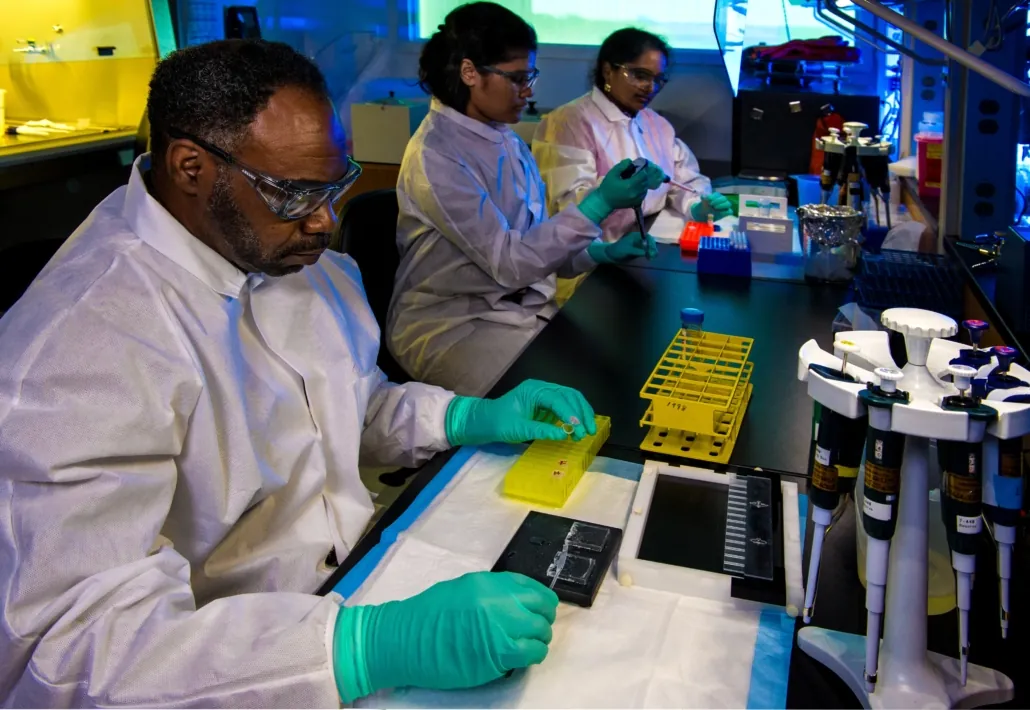
In research and in the pharmaceutical industry, biotechnology has contributed to an enormous increase in innovation and to the enrichment of the research and development portfolio. Numerous preparations from biopharmaceutical development have already found their way into everyday medical practice. Many more are in phases of clinical research. The various stages of research and development take up an enormous amount of capacity, which is why today's biopharmaceutical industry is characterised by corporate collaborations and decentralisation. Strategic partnerships of various kinds have become possible along the entire value chain. However, these collaborations with so-called third parties often make it more difficult to comply with the strict regulatory requirements for the approval of medicinal products. Smooth "workflow management" is becoming increasingly important.4